How to cultivate connection in our classrooms
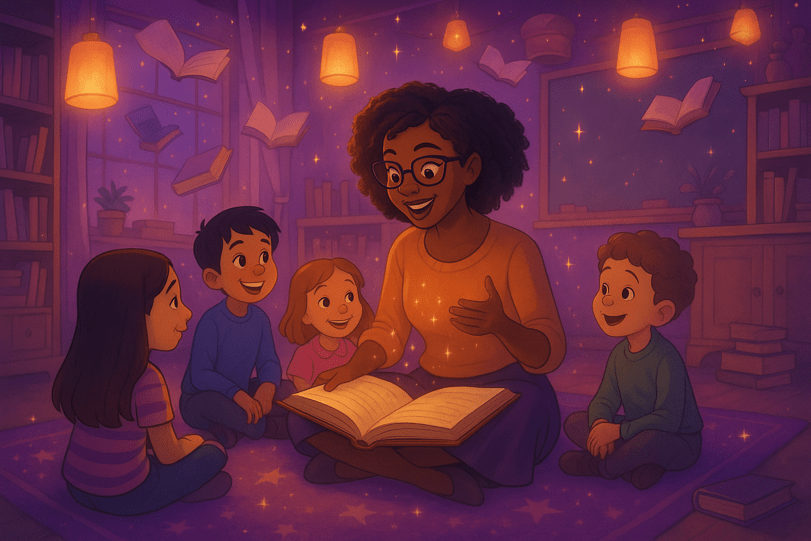
In education, teachers are often warned against sharing personal anecdotes with students. The reasoning is simple: privacy and professionalism. Students may misunderstand our stories, twist our words, or use them against us. We risk becoming either villains or fools in their minds.
But what if there’s another way? What if, instead of avoiding stories altogether, we told purposeful stories crafted with care and intention — not to overshare, but to connect? What if our students saw us not as distant figures, but as real, complex, and human?
Every day, we face the challenge of helping students connect with abstract content. Whether it’s compound interest or the causes of World War I, the gap between our world and theirs can feel ridiculously wide. My job, as I often say to my students, isn’t just to teach, it’s to convince them that even one thing I have to say is worth listening to.
Stories help bridge that gap. When I tell a story, especially one tied to our lesson, they step into a world filled with drama, humor, pain, curiosity, and humanity. It’s no longer just content, it’s a narrative!
Think of the emotional magic behind a great Disney movie. Why does it stick with us? Because it stirs three powerful emotions: drama, humor, and empathy.
Drama
Drama isn’t about gossiping about your cousin’s chaotic wedding. It’s about emotional stakes. If I want students to grasp the seriousness of predatory lending, I might tell them the story of a naive college student (who may or may not be me) sitting down in a cold, institutional office with a financial advisor, overwhelmed and afraid, signing a document they barely understood. The fear. The regret. The consequences. That’s drama!
Humor
Humor is the gateway. We all want to be the classroom comedian, but a good story uses humor sparingly and strategically. Instead of aiming for roaring laughter, shoot for a smirk, a chuckle, a knowing smile. Disney excels here! Think of Olaf from Frozen or my personal favorite, Kronk! Whimsy is a great way to connect with our students. Connection with humor always helps defeat the dragon of classroom chaos.
Empathy
Empathy is the soul of storytelling. It’s the journal of a WWI soldier saying goodbye to his love. It’s the inner world of a student hiding insecurity under brash behavior. When we show students that we care about the content we teach, about the world we inhabit, and especially about them, they will respond!
Empathy doesn’t mean preaching. It means positioning yourself as a human being who thinks and feels deeply, even if your values don’t always align exactly with theirs.
This is why storytelling matters. Not to indoctrinate, but to illuminate. Not to say “Here’s what to believe,” but rather, “Here’s where I stand, and here’s why it matters to me.” That’s what Disney stories do. They don’t demand we believe, they invite us to feel.
Students may not always agree with us. That’s okay! But when we share ourselves authentically, when we humanize our lessons, we create a space where students can better understand why we teach, why our lessons matters, and why we care. And that, more than any textbook definition, is what they’ll carry with them.
So tell your stories. Not for the applause. Not for the control. But for the connection! Because behind every great lesson, there’s a story waiting to be told.
Walt Disney himself once said, “I would rather entertain and hope that people learned something than educate people and hope they were entertained.” This might sound counterintuitive to everything I just said, but remember how he entertained us: with imagination, creativity, and artful skill.
Stay magical!
 TeachingWithDisney
Leave a comment